

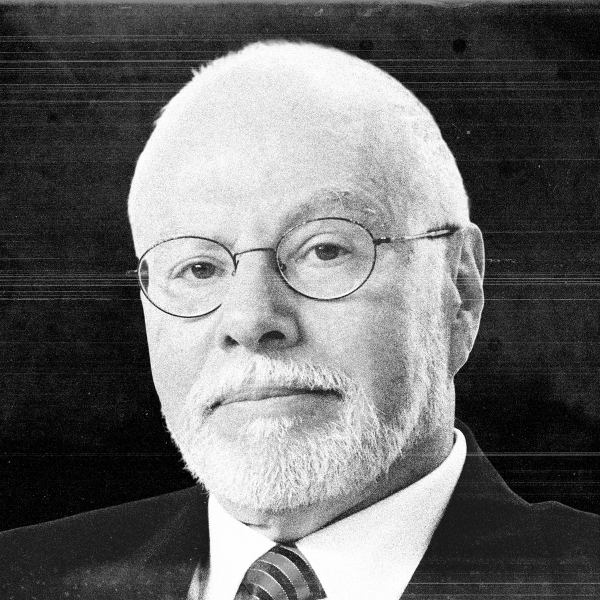
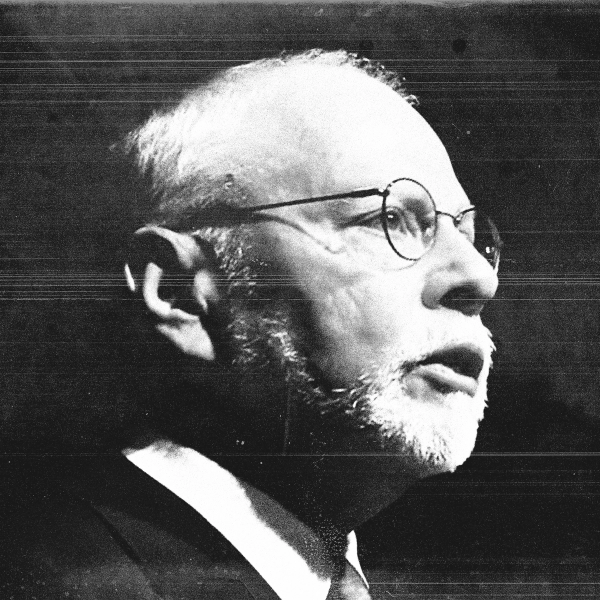
Paul Singer
KEY THREATS:
 Vulture Capitalism Far Right Financier Poised to benefit from the Venezuela Invasion
 How destructive does a hedge fund billionaire have to be, to be called “The Doomsday Investor” by The New Yorker? Just ask Paul Singer. He amassed his fortune through a ruthless finance strategy that effectively takes advantage of other countries. The term “vulture fund” was coined after his hedge funds, Elliott Management, became the first fund to successfully sue a sovereign nation for debt in a US court.
Singer’s victims have since included Peru, Vietnam, and the Republic of Congo, but until recently he was best known for a 15-year battle with the government of Argentina over a $117 million bond purchase that ultimately forced the country to pay him $2.4 billion.
Today, he’s most associated with an in-process purchase of Venezuelan oil assets barely two months before the US military’s shocking overthrow of the country’s president. Given Singer’s longtime funding of a neoconservative think tank that called for a military campaign against the Maduro regime, longstanding support of invasion architect Marco Rubio, and status as a top donor to Donald Trump and the Republican Party, it’s clear Singer is poised to benefit from the Venezuelan invasion.
NET WORTH
OTHER COMPANIES
LINKED TO
Donald Trump, Macro Rubio
AGE
81
STATE
New York
PART OF
Political Ideology
Neoliberalism
- Former chair of the Manhattan Institute which is a key purveyor of right-wing policies such as gutting the social safety net, opposing taxes on wealth, publishing anti-LGBTQ voices, and peddling anti-climate change messages and policies. The Manhattan Institute pushes narratives that immigrants are dangerous, commit fraud, and are a source of violent crime. Singer’s Foundation is a Manhattan Institute donor.
- While embroiled in a legal battle with the government of Argentina over government bonds, Singer’s tactics to secure profits were ruthless: he convinced the government of Ghana to seize an Argentinian naval training warship that was stationed off the coast in an attempt to get paid.
- Staunch supporter of Israel
Controversies
- The long-time GOP and Trump mega donor flew Supreme Court Justice Samuel Alito via private jet for a luxury fishing lodge vacation (Alito did not report the trip in his annual financial disclosures.)
- After the distressed auto parts maker in Ohio, Delphi Automotive, outsourced thousands of manufacturing jobs and cut Delphi retirees’ pensions, the firm was eventually acquired by private equity. Working with fellow billionaire Dan Loeb to take over Delphi Automotive, Singer and other investors reportedly turned a $435 million investment into a $1.54 billion equity stake.
- In 2024, the Wall Street Journal reported on an Israeli private investigator reportedly working with the DC lobbying firm, DCI Group, was wanted in connection to an “alleged globe-spanning hacking-for-hire operation that targeted opponents of hedge-fund firm Elliott Management.” The WSJ quoted Elliot’s spokesperson as saying “Elliott is not aware of this alleged investigation and has not been contacted by any government officials about this matter.”
- The Singer-backed group, The Free Beacon, hired an oppo research and strategic intelligence firm, Fusion GPS, in 2015 to uncover damaging intel on several Republican political candidates. This included Donald Trump until he secured the Republican nomination in 2016, when the firm was told to stop looking into Trump.
- During his 15 year legal fight to extract billions from the nation of Argentina, made headlines for trolling the country by attending the 2014 World Cup in an Argentina jersey.
Obscene spending
- Owns a 5,000 square foot mansion on Martha’s Vineyard, currently valued at $17 million.
- Previously linked to mansions in West Palm Beach, FL, along with two ritzy apartments near Central Park in Manhattan, worth an estimated $16 million combined.
Enabling
Fossil Fuel Profiteering & the US Invasion of Venezuela
- Shortly after the US military invaded Venezuela and abducted President Maduro in January 2026, President Trump stated that "we're going to be taking out a tremendous amount of wealth out of the ground” and that “our very large United States oil companies” would be swooping in to extract oil.
Paul Singer stands to heavily profit from these plans. In November 2025, Singer’s investment firm bought at auction the US subsidiary of Venezuela’s state-run oil company, CITGO, for $5.9 billion. The Maduro government, along with other bidders, appealed the court decision to sell CITGO to Singer. In January 2026, Fortune reported that while those appeals were still pending, the deal was expected to close before the end of 2026. That same month the Singer-funded Foundation for Defense of Democracies released a report calling for the US to take “decisive and overwhelming military action” in Venezuela..
- The sale of CITGO still requires US Treasury approval, but Singer is one of the GOP’s most active billionaire political donors who has met with Trump multiple times, as recently as 2024. In 2024 alone, he donated $5 million to Trump’s Make America Great Again PAC and many millions more supporting Republicans in Congressional elections. Singer also gave an undisclosed amount to Trump’s second transition. The billionaire donor is also a longtime supporter of Secretary of State Marco Rubio, one of the key architects of the Venezuela invasion, and Singer’s personal endorsement for president in 2015. Singer reportedly played a fundraising role in Rubio’s 2022 campaign as well.
- This Venezuela deal is the latest of Paul Singer’s moves to invest in dirty fossil fuels. Singer’s firm has purchased major stakes in fossil fuel companies' stock, including BP. Forbes called Singer’s hedge fund “BP’s Aggressive Uninvited Guest,” citing Singer’s “well-established reputation for working to force management teams at major companies to implement radical changes designed to increase returns to investors.” Shortly after Singer’s hedge fund took a major stake in the company, BP announced plans to decrease its investments in renewable energy like solar and electric. After Singer acquired a major stake in Canadian fossil fuel company, Suncor, in 2022 the company sold off wind and solar assets.
Looting of Struggling Countries
- Singer's latest moves in Venezuela come after decades of predatory and harmful business dealings around the world. Elliott Management has exacted enormous profits from countries in financial distress by purchasing sovereign debt (e.g. debt issued by governments). Called “vulture funds,” because these predatory investors purchase debts owed by struggling countries, most often in Africa and South America, sometimes for pennies on the dollar. Vulture funds often secure billion dollar debt payments to enrich themselves while communities face poverty, slashed public services, and destabilized economies.
- Vulture fund playbook
- Step 1: Buy a struggling country’s debt at a steep discount
- Step 2: Refuse to engage in good faith debt negotiations to block restructuring deals
- Step 3: Sue the country in New York courts to demand full repayment with interest
- Step 4: Take advantage of international debt relief while communities face austerity
- Step 5: Maximize payouts at the expense of local communities
- In the 1990s, Singer’s hedge fund was the first hedge fund to go after a sovereign nation for debt in a US court when it successfully sued Panama. Since then, Elliott Management’s specialty has been aggressive and drawn-out sovereign debt litigation, even taking his claim to the US Supreme Court, inspiring other vulture funds in the process.
- Most notoriously, Elliott Management bought up Argentinian bonds at a huge discount after the country defaulted on billions in debt in 2001. Singer and his firm then spent 15 years fighting Argentina over bond debt. This was in addition to Singer’s legal battles with Peru, Vietnam, and the Republic of Congo. During debt negotiations with Argentina, Elliott Management and other hedge funds refused a proposed restructuring deal that 93% of the country’s creditors were prepared to sign. This affected nearly half a million creditors while just a handful of vulture funds held those creditors hostage. These legal battles forced the government of Argentina to waste enormous legal resources to respond to each of Singer’s lawsuits, which enraged the people of Argentina. The result of these unscrupulous tactics? A $2.4 billion payout from Argentina to Singer’s firm in 2016, a 1,270-per-cent return on its initial investment.